Loading…
Back to Compound Explorer
Sparassis beta-glucan (SCG)
Clinical trialMechanism of Action
SCG is a beta-1,3-glucan with beta-1,6 branching that binds with high affinity to Dectin-1 and complement receptor 3 (CR3) on macrophages, dendritic cells, and neutrophils. Dectin-1 engagement triggers Syk kinase phosphorylation and downstream activation of NF-κB and NFAT transcription factors, resulting in robust production of TNF-α, IL-1β, IL-6, IL-12, and type I interferons. SCG promotes dendritic cell maturation and cross-presentation of tumor antigens to CD8+ cytotoxic T cells. It also enhances complement system activation via the alternative pathway and promotes M1 macrophage polarization in tumor microenvironments.
Research Notes
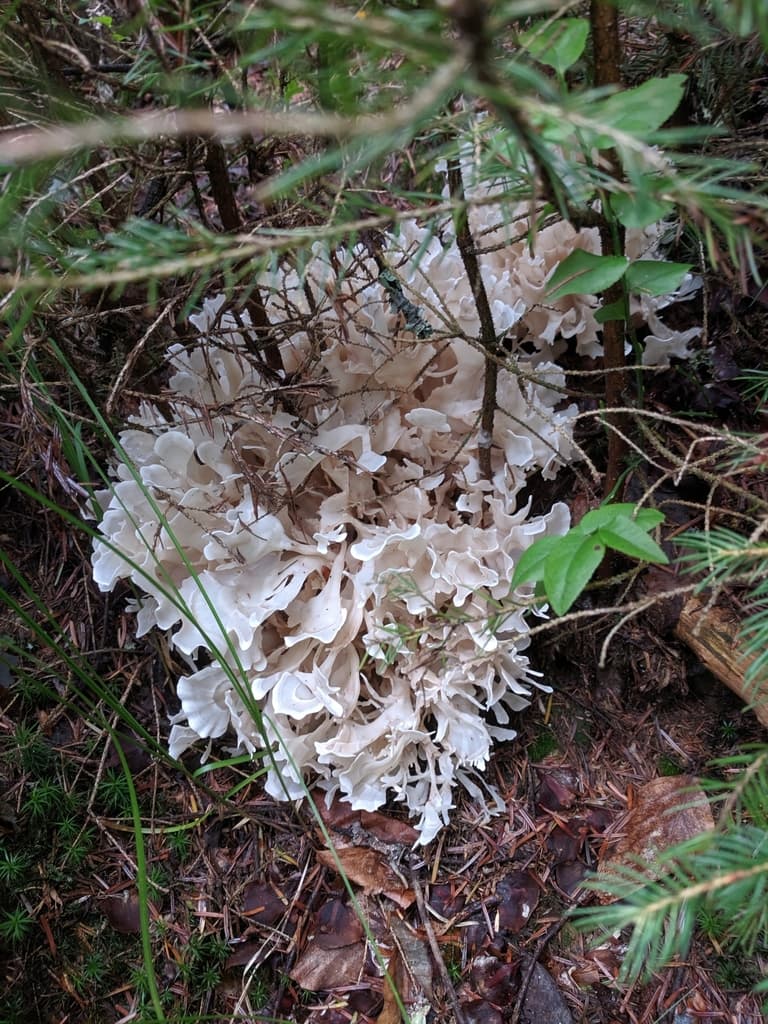
Cauliflower MushroomMushroom
Harada et al. (2002) demonstrated that oral SCG activated peritoneal macrophages and enhanced cytotoxic T cell responses in tumor-bearing mice. A Japanese pilot clinical study by Yoshikawa et al. (2010) in gynecological cancer patients receiving chemotherapy showed that oral SCG supplementation maintained or improved NK cell activity and quality of life scores during treatment. In vitro potency comparisons consistently show SCG as more potent per weight than lentinan or maitake D-fraction in macrophage activation assays.
Found In 1 Herb
3D Molecular Structure
Beta-1,3/1,6-glucan polysaccharide
Drag to rotate · Click atoms to explore
Sparassis beta-glucan (SCG)
Beta-1,3/1,6-glucan polysaccharideComplex carbohydrate polymers that modulate immune response
Representative pattern: (C₆H₁₀O₅)ₙ
Atoms
Carbon
Oxygen
Live Research
This information is for educational purposes only and does not constitute medical advice. Always consult a qualified healthcare practitioner before using any herbal product.
These statements have not been evaluated by the Food and Drug Administration. This product is not intended to diagnose, treat, cure, or prevent any disease. This content is for educational purposes only and is not a substitute for professional medical advice.