Loading…
Back to Compound Explorer
Cordycepin (3'-deoxyadenosine)
ModerateMechanism of Action
Cordycepin is a 3'-deoxyadenosine that enters cells via equilibrative nucleoside transporter 1 (ENT1) and is phosphorylated to cordycepin monophosphate, which mimics AMP and directly activates AMPK via the gamma-subunit, independent of adenosine receptors. Downstream AMPK activation inhibits mTORC1 and mTORC2, suppressing cell proliferation and inducing autophagic cell death in cancer models. Cordycepin also terminates RNA polyadenylation by incorporating into mRNA poly(A) tails and acting as a chain terminator (lacking the 3'-hydroxyl group), disrupting mRNA processing. Additionally, it acts as an agonist at adenosine receptors (A1, A2A, A2B, A3), elevating intracellular cAMP and modulating anti-inflammatory and vasodilatory pathways.
Structural analogue of adenosine lacking a 3'-hydroxyl group on the ribose moiety. Inhibits RNA synthesis by causing premature chain termination when incorporated into growing RNA strands. Modulates purinergic signaling through adenosine receptor interactions (A1, A2A, A2B, A3). Activates AMPK pathway, inhibits mTOR signaling, and suppresses NF-κB-mediated inflammatory gene transcription. Anti-tumor activity involves induction of apoptosis via caspase-3 activation and cell cycle arrest.
Research Notes
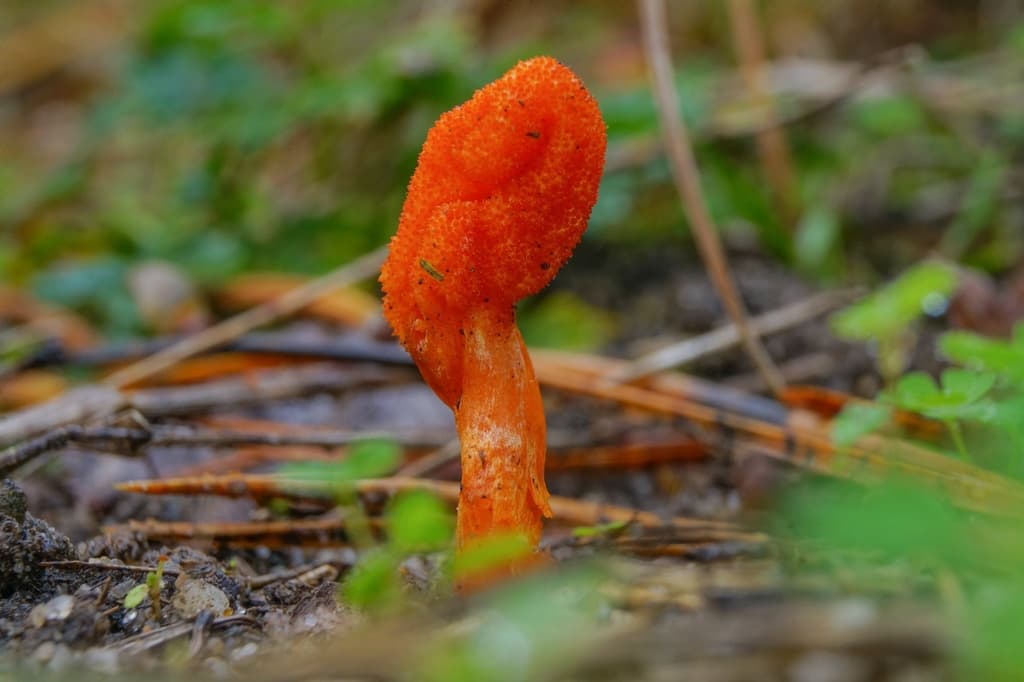
CordycepsMushroom
Cordycepin's AMPK-activating mechanism was elucidated by Hawley et al. (2020, Cell Chemical Biology), demonstrating direct gamma-subunit binding independent of adenosine receptor signaling. An in vitro study (Lee et al., 2019, Molecules) showed cordycepin induces apoptosis in multiple cancer cell lines at 10–100 µM via AMPK/mTOR axis. The polyadenylation termination mechanism was demonstrated by Kondrashov et al. (2012, Nature). Cordycepin is found in BOTH fruiting body and mycelium of C. militaris, with significantly higher concentrations in fruiting body (up to 8 mg/g dry weight). C. militaris contains up to 90× more cordycepin than wild O. sinensis.
Cordyceps guangdongensisMushroom
Cordycepin content in C. guangdongensis is documented but substantially lower than in optimized C. militaris strains (which can reach 2–3% dry weight). Anti-inflammatory, antiviral, and antitumor activities of cordycepin have been extensively studied across Cordyceps species in both in vitro and animal models. A 2020 review in Pharmacological Research summarized over 100 studies on cordycepin bioactivity. Specific to C. guangdongensis, cordycepin contributes to the overall bioactive profile but is not the primary differentiating compound.
Found In 2 Herbs

3D Molecular Structure
Nucleoside analog (adenosine derivative)
Drag to rotate · Click atoms to explore
Cordycepin (3'-deoxyadenosine)
Nucleoside analog (adenosine derivative)Bioactive phytochemical with therapeutic properties
Representative pattern: C₄H₂NO
Atoms
Carbon
Oxygen
Nitrogen
Hydrogen
Live Research
This information is for educational purposes only and does not constitute medical advice. Always consult a qualified healthcare practitioner before using any herbal product.
These statements have not been evaluated by the Food and Drug Administration. This product is not intended to diagnose, treat, cure, or prevent any disease. This content is for educational purposes only and is not a substitute for professional medical advice.